Anthropic says Claude AI solved nine-loop particle physics challenge
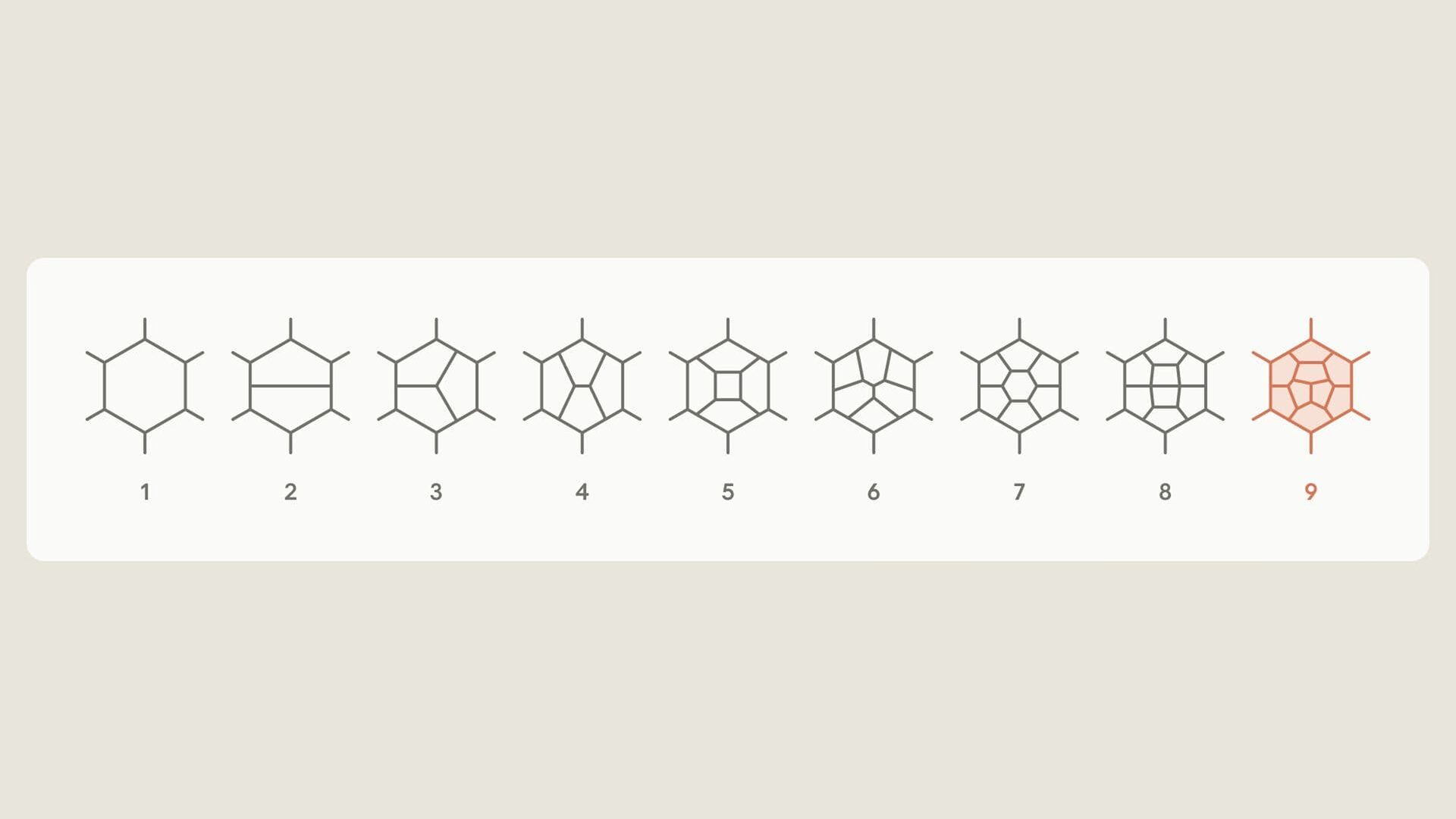
Anthropic said on Friday that its Claude AI computed the nine-loop, six-particle scattering amplitude in planar N=4 super-Yang-Mills theory, surpassing the previous eight-loop record set in 2023.
The work answered a public challenge issued weeks earlier by physicist and science writer Matt von Hippel, who had asked AI companies to solve an outstanding particle physics problem on an academic-scale budget.
Two Anthropic physicists, Liam Fitzpatrick and Siddharth Mishra-Sharma, directed Claude’s Fable 5.1 model inside Claude Science with a short prompt describing the problem and instructions to keep working overnight.
Claude completed the calculation in two ways, a direct bootstrap method and an indirect form-factor approach, at an estimated cost of $1,000 to $2,000 per method. Most of the expense came from running Claude itself.
Scattering amplitudes are formulas used to predict how subatomic particles interact. Higher loop orders add more complex quantum corrections, and most real-world amplitudes have been calculated only to two or three loops.
The previous record in planar N=4 super-Yang-Mills was eight loops, achieved in 2023 by SLAC and Stanford physicist Lance Dixon and Andy Liu.
N=4 super-Yang-Mills is a simplified toy theory rather than a model of real-world particles. Physicists use it to develop and test mathematical techniques before trying to apply them to less symmetric theories.
Dixon spent two weeks independently validating Claude’s output, mainly through the nine-loop form factor, and called the result “quite a triumph” for a large language model.
He said Claude had to develop the necessary code from scratch and carry out a fragile computational process in which any mistake would cause the full construction to fail.
A group led by Song He at the Chinese Academy of Sciences had also independently computed most of the nine-loop symbol with some GPT-6 assistance, and published its dataset on Zenodo on Sept. 17.
Von Hippel wrote that the human-led effort also deserved credit and that researchers, not Claude, would publish and analyze the results for the field.
Von Hippel said Claude used established methods with somewhat more computation than researchers had previously attempted, rather than inventing new physics. Dixon said the bigger questions will come “when large language models start to come up with new physical principles and insights before humans.”
Featured image credit