How computer vision is democratizing wildlife observation: Inside the AI of smart bird feeders
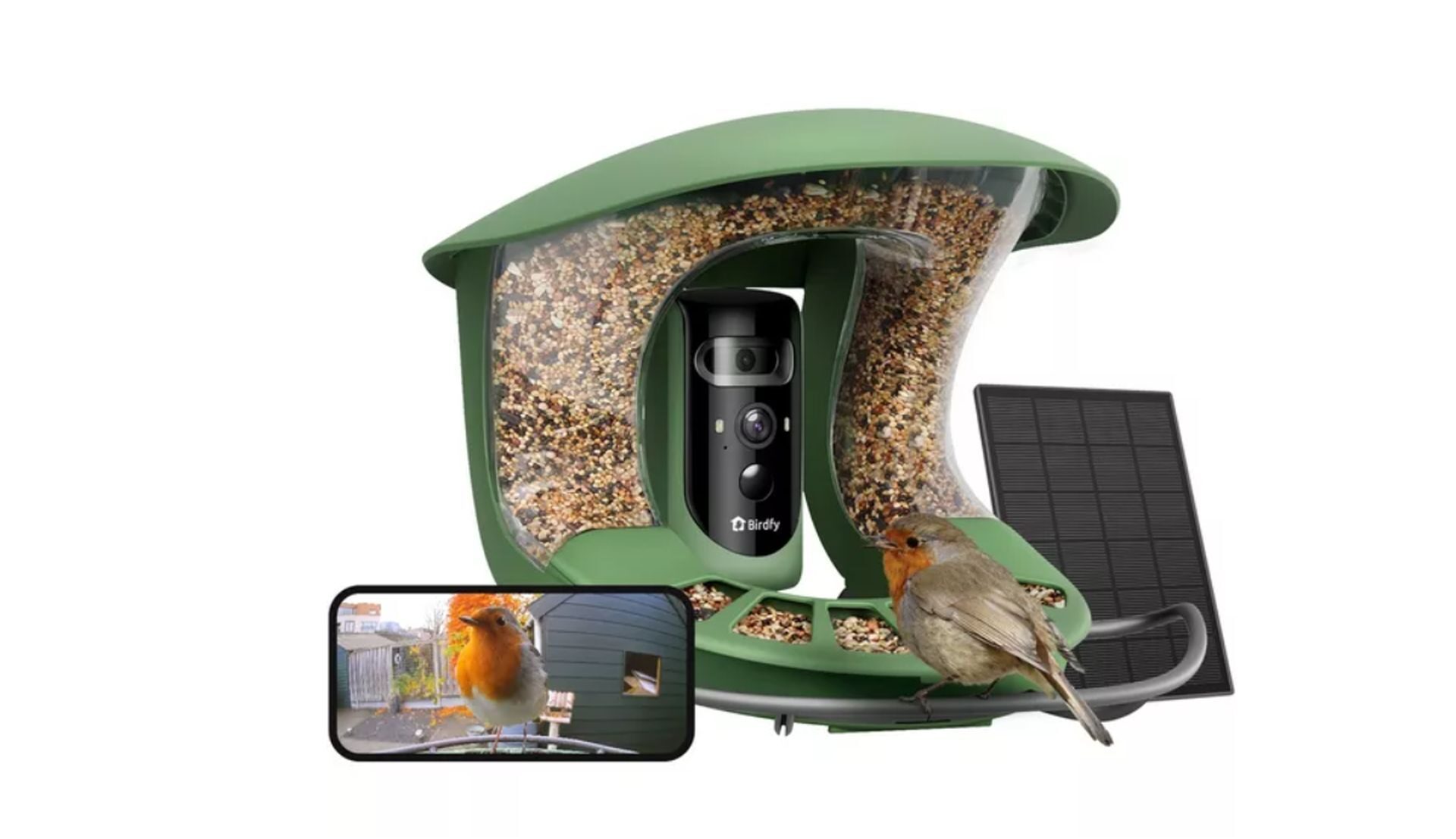
Observing wildlife was once a persistent activity, involving specialized equipment and many hours spent outside waiting for the right moment. Computer vision is now changing it. A camera placed next to a bird feeder can automatically photograph visitors and has the AI features to analyze the photos to identify the birds without an ornithologist.
Smart bird feeders are at the crossroads of computer vision, machine learning, edge computing, cloud infrastructure, and consumer IoT. A modern video bird feeder may look like a backyard device, but it is actually a small wildlife monitoring system.
The technology also marks a wider trend in Artificial intelligence (AI)– once limited to research labs, it is now reaching consumers through common consumer devices.
From bird photos to machine-readable data
The first stage of automated wildlife observation is acquiring images. A smart feeder can take photos or videos when it detects activity using one or more cameras. Depending on the camera type, motion detection may also determine whether a bird has entered the camera’s field of view and eliminate unwanted recordings.
This turns a spontaneous backyard encounter into visual data. A standard photo just captures what has taken place. A computer-vision system tries to decipher it. It may analyze form, color, posture, beak shape, wing patterns, and other visual traits before passing the data on to a classification model.
This is significant. The camera is the only sensing layer. Hence, the software pipeline behind it provides the intelligence.
How image recognition works
One of the most common approaches today to image-recognition systems is to build a neural network from a large set of labeled images. CNNs laid the groundwork for computer vision, and more recent models like transformer-based architectures have pushed model capabilities beyond the purely visual.
Creating a bird feeder can be broken down into a few steps. The system first takes a picture. Then, preprocessing can resize the image, improve its quality, or extract a specific portion of it. A detection model can then determine whether a bird is in the frame. If it does, classification algorithms can then compare the visual properties with the learned representations of various species.
The model isn’t a literal one in which a person has to look up a bird like looking up a word in an encyclopedia. Instead, it predicts probabilities based on patterns it learned during training.
That’s why image quality is important. Lighting, camera position, distance, overlap of body parts, seasonal plumage, and similar species can all affect classification accuracy.
Species classification is a probability problem
A model can start by recognising a general class, e.g., “bird.” A second stage can then discriminate between species or groups of closely related species. The classification model analyzes the visual information contained in the frame and generates confidence values.
This method is especially intriguing in the machine-learning domain, as smart bird feeders are becoming increasingly common. The system must handle situations that are not carefully framed in a lab environment.
Birds can fly in from various directions. May overlap with other birds, may appear in shadows, or may be only partially obscured by feeder components. A good model should be exposed to significant variation during training.
This does not yield perfect identification. Instead, it is probabilistic computer vision in a highly variable real-world environment.
Edge computing: Intelligence closer to the camera
Edge computing is another important part of the architecture. Some processing could be done near the device rather than sending all the frames continuously to a remote server. Simple tasks such as motion detection, image filtering, or other lightweight AI functions may be performed on the device.
This approach offers several benefits. It helps reduce bandwidth use, lower latency, and avoid uploading irrelevant footage to the system. If hundreds of frames were being recorded, a feeder recording thousands of frames each day would incur unnecessary computational and storage costs.
Edge processing can thus be used as the first filter in the Artificial Intelligence (AI) pipeline. The split between the device-side and the cloud-side processing depends on the product. More complex models might still benefit from more remote infrastructure, especially if species recognition involves larger neural networks.
The cloud data loop
The other half of the architecture comes from cloud computing. Once such images or events prove useful, more intensive processing can happen in the cloud infrastructure. Observations and media can be stored and organized, recognition models can be run, and results can be synchronized with the mobile application.
This creates a data loop: Camera → Detection → Image Processing → Species Classification → Cloud Storage → User Application.
As more observations are made, the loop can also be used more effectively. As the dataset expands, it can power analytics, model testing, and user-experience optimization.
But data doesn’t necessarily improve an AI system’s performance. Training data should be representative, correctly labeled, and well-maintained. Poor-quality labels or poorly provided examples can cause errors that are hard to spot at scale. This is as crucial as the camera body for consumer wildlife technology.
Birdfy as a commercial case study
Commercial smart feeders are a good example of how these technologies are rolling out into mainstream consumer products. Birdfy brings a connected camera and AI-powered birdwatching capabilities, turning a simple bird feeder into an AI-driven platform for observing and documenting wildlife experiences.
A modern video bird feeder is more than just a camera attached to a food source. The camera acts as an input device for a broader computer vision workflow, and software converts the captured footage into searchable, interpretable observations.
Abstraction is the important change for the users. To benefit from computer vision, they don’t need to know neural network architectures, inference pipelines, or cloud APIs. They communicate with an application and get an explanation of what the camera saw. That’s a big component of AI’s democratization.
Why consumer computer vision matters
Camera traps and automated monitoring systems have supported wildlife research for years. These systems can capture vast quantities of visual data from forests, wetlands, conservation areas, and other habitats.
At home, smart feeders make it easier to apply the same concept. A video bird feeder can keep a close eye on a small area without having to stay there. Over the years, these observations can become a personal wildlife record.
This also affects people’s interactions with AI. Whereas previously AI was an invisible recommendation engine operating in the background in a data centre, computer vision is now something that users can see working in their own surroundings. The technology can spark interest and reduce the technical difficulty of observing wildlife.
The remaining challenges
While computer vision is a formidable problem, identifying wildlife remains a difficult machine learning task. Closely related species can look similar. A young bird can look very different from the adult bird. Colors can change with weather and lighting, and camera position can affect an animal’s apparent shape.
Privacy and data-handling issues are also at stake. The connected cameras are used in physical environments where people, houses, and other properties could sometimes be in the picture. Responsible product design requires appropriate controls around data collection, storage, access, and sharing.
The technology’s potential is not reduced by these difficulties. They reveal the engineering challenges beneath a one-device consumer product.
From smart feeders to ambient wildlife intelligence
Smart bird feeders are a small but revealing application of computer vision. The architecture combines sensing, machine learning, edge processing, cloud infrastructure, and mobile software to provide a largely automated system. As capabilities increase and hardware costs decrease, similar systems may be installed in gardens, parks, ecological monitoring, and citizen-science efforts.
It is not just that a feeder can identify a bird. It is the advanced “visual intelligence” that is now taking over in everyday objects.
The need for computer vision is expanding beyond specialized laboratories and industrial uses and is becoming more common in the everyday environment. When that transition happens in the backyard, as it does with smart feeders, wildlife observations are automated, more accessible, and more data-driven.

Further reading

Nvidia unveils 120B-parameter Nemotron Super VL