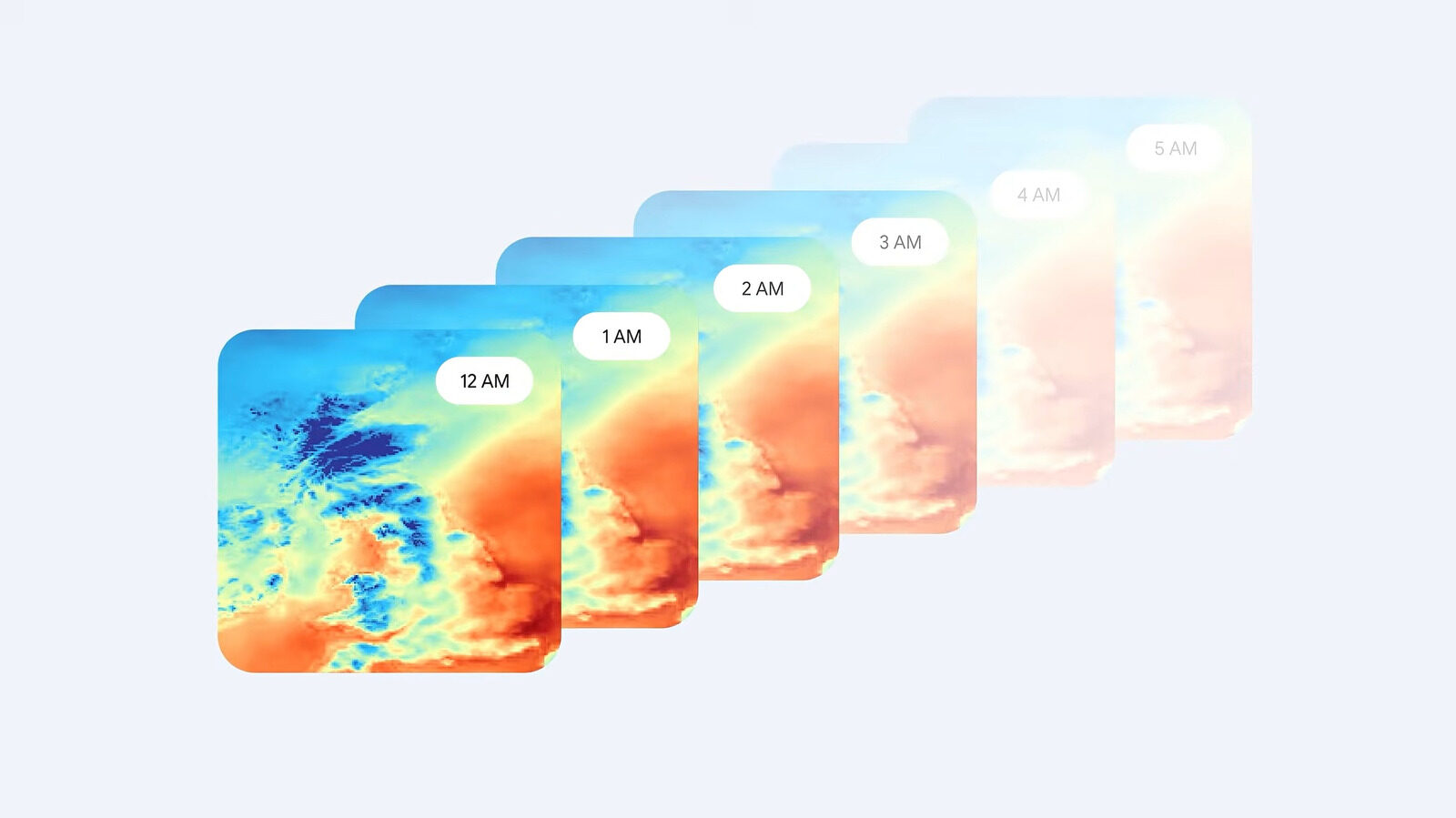
Google DeepMind has released WeatherNext 3, an updated AI weather model that uses live satellite data to deliver higher-resolution forecasts for temperature, moisture and wind speed.
The new model produces hourly forecasts on a 5-kilometer square grid, compared with the 25-kilometer square grid used by WeatherNext 2, DeepMind said.
DeepMind said the higher resolution comes from training WeatherNext 3 on live satellite data instead of relying mainly on numerical weather prediction models, which carry a six-hour lag. The company said the satellite input gives the model a continuously updated view of the atmosphere.
WeatherNext 3 also uses sparse weather station data to improve forecasts for variables such as humidity, which can shift sharply over short distances.
DeepMind said the model could be useful for renewable energy companies because it can forecast 100-meter wind speeds, which are roughly turbine height, for wind-energy output. It also provides high-resolution cloud cover and solar radiation forecasts for solar farms.
The model combines precipitation data from NASA and Google’s satellite analysis to improve rain and snow forecasts. DeepMind said WeatherNext 3 delivers up to 50% more accurate precipitation forecasts, with the largest gains in regions where forecasts have historically been less reliable.
WeatherNext 3 will power weather features in Google Search, the Gemini app and Google Maps, as well as the Google Maps Weather API and Google Earth Engine.
Users can test the model in Google Weather Lab. Google also said the original WeatherNext model has been open-source since August 2026 for developers that want to build with it.
Featured image credit