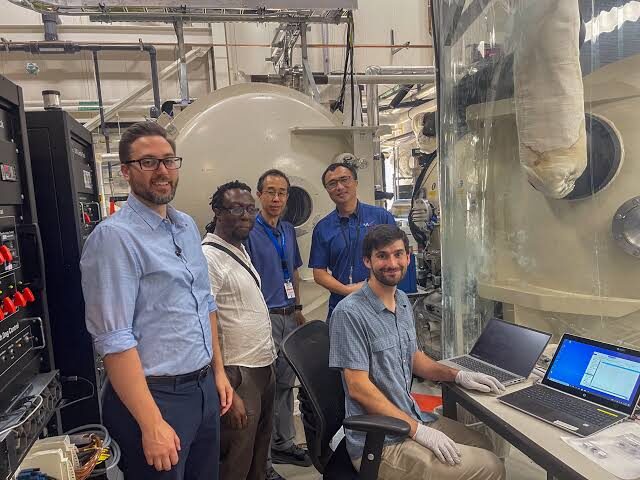
NASA shared details of its SPEARS project to develop batteries that withstand extreme cold for potential use in future Moon campaigns, including Artemis missions.
The batteries replace liquid electrolytes with solid ceramic or polymer materials. NASA said they still need warming before operation, but have not been damaged by extreme cold so far and require less energy-intensive thermal-management systems than conventional lithium-ion batteries.
SPEARS stands for Solid Power for Extreme Environment Adaptability and Resilience in Space.
Most electronics on Earth use lithium-ion batteries with liquid electrolytes. Those liquids can freeze at low temperatures and damage the batteries, which also do not function well at very high temperatures.
The Moon can reach daytime highs of 212 degrees Fahrenheit (100 degrees Celsius). Nighttime temperatures at its south pole can fall to minus 328 degrees Fahrenheit (minus 200 degrees Celsius), extremes that current battery technology cannot adequately handle.
The team is developing the batteries for the extreme climate of Mars, with possible eventual uses in electronic devices on Earth.
Featured image credit